
firaaq - فراق
ہجر کی راتیں بھی کیا راتیں ہیں

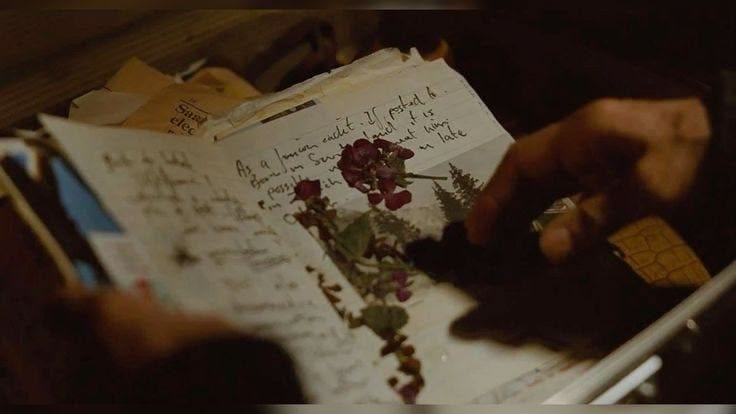
There are words that merely name a feeling, and then there are words that become the feeling itself. Firaaq belongs to the second kind. It is not just separation, and it is not only absence. It is the ache that remains after presence has gone. It is the silence left behind by a voice that once lived in your days. It is the empty shape of someone in the room of your heart, the missing warmth on the edge of memory, the soft wound that does not bleed but never truly heals. Firaaq is not a single moment. It is a climate. It is an atmosphere of longing, a slow burning state of being parted from what one loves, what one lost, what one cannot return to, and what one continues to carry anyway.
In Urdu, firaaq has a special tenderness, because Urdu itself was made for words that do not merely describe life but mourn it, adorn it, and make it sing. The word comes through Arabic, فراق, meaning separation, parting, distance, the state of being divided from someone or something cherished. In Urdu poetry, however, it becomes far more than dictionary meaning. It becomes a whole emotional universe. When the Urdu tongue says firaaq, it does not simply say “we are apart.” It says that love has survived enough to become pain. It says the soul has stretched itself across distance and is still reaching. It says what the body cannot say and what tears cannot fully explain.
Firaaq is a strange kind of pain because it is visible, but a bit of a quiet torment on the soul itself. It is in the unused cup on the table. In the message not sent, conversations left incomplete. In the street you walked together once. In a song that suddenly feels like an old wound. It is in the way the evening looks different when someone is missing. It is in the way time itself grows heavy, as though every second has to carry the burden of a name. Firaaq is an entity that haunts everyday life, always just at the edge of vision, pressing into the corners of perception so it is felt before it is ever seen.
And yet, there is beauty in firaaq too, though it is a beauty that arrives bruised. Urdu literature has always understood that pain can be luminous better than any other. The beloved is often distant, and that distance itself becomes the source of poetry. The lover does not only suffer firaaq, he is changed by it. Separation makes language more tender, makes memory more vivid, makes yearning more articulate. Without firaaq, perhaps love would remain incomplete in expression. It is firaaq that teaches the heart how to speak in sighs, how to write in longing, how to turn absence into verse.
“فراقِ یار میں دل یوں بھی جل اٹھا
کہ جیسے رات کے سینے میں چاند ڈوب گیا”
In the separation from my beloved, my heart burned in such a way,
As though the moon had sunk into the chest of the night.
There is something terribly human in this. We are creatures who do not simply love what is near. We are also haunted by what is gone. We remember in pain because remembering is one of the last forms of keeping. Firaaq is, in many ways, proof that love was real enough to hurt. It is the evidence of attachment. It is the scar left by tenderness. It is not the opposite of love. It is one of love’s most devastating proofs.
In Urdu, words like hijr, firaaq, furqat, and judai carry different shades of separation, but firaaq has a special softness and depth. Hijr feels like exile of the soul. Furqat feels like a formal distance, a civil wound. Judai is common, direct, and earthly. But firaaq has the scent of poetry in it. It is not merely the fact of being apart, but the suffering of being apart. It suggests a soul that has not accepted absence as ordinary. It suggests a heart still arguing with reality. In firaaq, the beloved is not gone in the mind. They are gone in the world, but alive in longing. That is why firaaq is so unbearable and so beautiful at once.
What makes firaaq especially special is that it does not belong only to romantic love. It also names the separation from home, from childhood, from faith, from peace, from a version of yourself that is long gone. One can suffer firaaq of a person, yes, but also of a place, a season, a mother’s voice, a father’s hand, a forgotten version of the self. Sometimes we are in firaaq from our own innocence. Sometimes we are in firaaq from the ease with which we once breathed. Sometimes life itself becomes a long migration away from what once felt close and safe.
“کچھ اس طرح سے فراق نے مجھ کو تھام لیا
کہ میں جہاں بھی گیا، اپنے آپ سے دور رہا”
Separation held me in such a grip,
That wherever I went, I remained distant from myself.
This is the cruelty of firaaq. It does not only separate us from the other. It can separate us from ourselves. When someone leaves, they sometimes take with them the version of us that existed in their presence. Or perhaps they do not take it, but they reveal how much of us had been built around them. Then the absence becomes an exposure. We stand in the raw air of our own loneliness and realize how much of our being was shaped by someone else’s existence. Firaaq can make a person feel unfinished, as though a vital sentence has been cut before its end.
And still, people write about it. They sing it. They survive it. They make from it something enduring. That is the miracle of Urdu poetry. It knows how to take the most unbearable emotion and turn it into a shape that can be held. Ghalib understood this ache. Faiz understood its politics and its tenderness. Ahmed Faraz carried it with elegance. Parveen Shakir gave it a body of silk and sorrow. In their work, firaaq is not just personal. It becomes existential. It becomes social. It becomes the human condition itself. We are all, in some sense, in firaaq from something. Youth. Certainty. Home. Love. God. Peace. The self we thought we would become.
Firaaq teaches the heart a particular kind of literacy. It teaches one how to read absence. To understand the language of unfinished things. To hear echoes where others hear silence. To find meaning in the ruins of intimacy. It sharpens memory until even ordinary moments become sacred. A lifted eyebrow. A shared cup of tea. A sudden laugh. A name spoken softly. Firaaq makes these things glow in hindsight. The wound makes the past radiant, and that radiance is nearly unbearable.
The separation from the beloved can resemble the soul’s separation from its source. That is why longing feels older than personal history. It feels inherited. It feels as though the human being was born already missing something. Some yearnings are too vast to belong only to romance. They feel metaphysical. They feel like the ache of exile from a place the soul remembers but cannot name. Firaaq becomes the name for that nameless ache.
“دل کی ویرانیوں میں بھی اک بستی ہے
فراق وہ گھر ہے جہاں یادیں رہتی ہیں”
Even within the wastelands of the heart, there exists a settlement;
Separation is that house where memories reside.
The tragedy of firaaq is that it can make absence more vivid than presence ever was. A person may have been quietly ordinary in life, but in their departure they become a universe. Their absence enlarges them. Their memory becomes more fragrant, more unbearable, more precious. This is how longing works. It edits reality with emotion. It turns what was once simple into something mythic. And maybe that is why firaaq hurts so deeply. It does not just take someone away. It remakes them in the architecture of our inner world, where they continue to live as a shadow, a prayer, an ache.
Yet firaaq is not only about pain. It also carries dignity. There is nobility in longing. There is a profound human grace in continuing to love what is absent. To remember with devotion. To stay soft despite being hurt. To keep a place open inside the heart for someone or something that has left. Firaaq is a wound, yes, but it is also a testament to the depth of one’s capacity for attachment. It says that the heart did not remain careless. It loved enough to be marked. It gave enough to miss. It stayed true enough to ache.
In the end, firaaq is one of those Urdu words that feels like a tear held between the tongue and the heart. It is graceful and broken at the same time. It carries the history of separation, but in Urdu it becomes the poetry of separation, the art of longing, the music of what cannot be reached. It is not a word one simply understands. It is a word one recognizes in the body, in memory, in silence, in the slow evening hours when the world feels too large and the heart feels too small. Firaaq is the name of the distance that lives inside love, and perhaps that is why it has survived so beautifully in Urdu. Because Urdu, more than most languages, knows that the deepest feelings are not always the ones that arrive. Sometimes they are the ones that leave behind an echo.
And maybe that is the final truth of firaaq. It is not simply what happens when love ends. It is what happens when love remains, but the beloved does not. It is grief with memory. It is devotion without touch. It is the heart continuing to beat around a hollow space, making music from what is missing. It is a word that does not close the wound, but gives it a name. And sometimes, to name the wound is the only way we know we are still alive.
“فراق بھی عجیب شے ہے، وصال کی ضد نہیں
یہ وہ درد ہے جو محبت کے ساتھ جیتا ہے”
Separation is a strange thing; it is not merely the opposite of union.
It is a pain that lives alongside love.
Beautifully written!
Reem ji, I awoke this morning at 6am with pain spilling out of my eyes all the way to the page and I wrote for what felt like 5 minutes but it has been over an hour. I just put down my pen, stumbled across this piece and cried some more. Jaise ki kisi ne rooh ko pehechaan liya, suraj ke nikal se bhi pehle